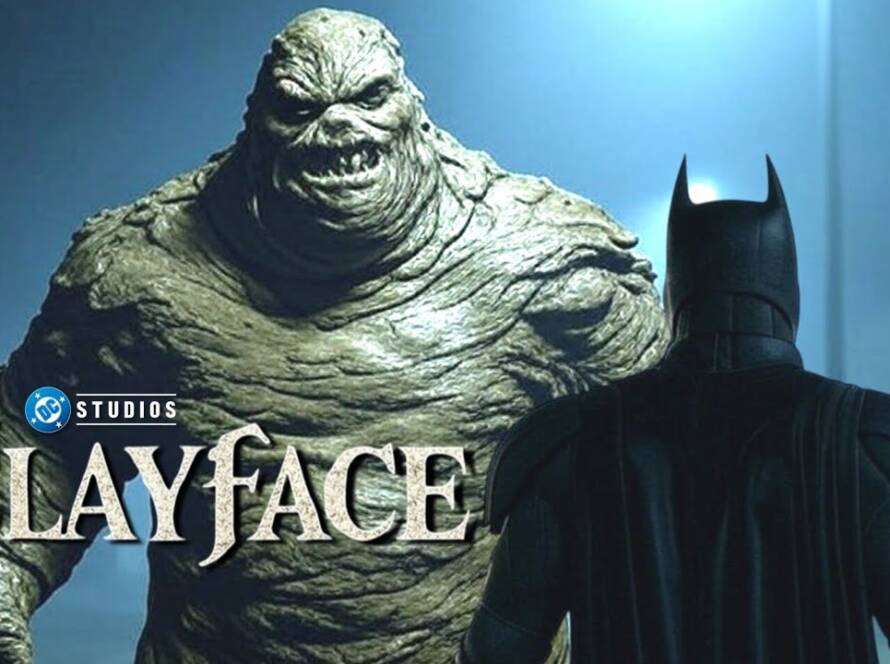
Meet the shape-shifting DC villain who can steal anyone’s face, turn his body into a weapon, and blur the line between a tragic character and a monster.
Batman has fought clowns who want to watch the world burn, assassins who treat murder like an art form, and billionaires who believe money can buy them an army. But one of Gotham’s strangest enemies presents a different kind of nightmare: a man who can literally become someone else.
His name is Clayface.
With DC Studios bringing the character to the big screen in a standalone horror film, Clayface is stepping into the spotlight. But unlike the Joker or the Riddler, he is not necessarily the first name that comes to mind when people think of Batman’s greatest enemies.
So, who exactly is Clayface, what makes him so dangerous, and why does Batman keep running into a man made of mud?
Clayface Is Not Just One Person
Clayface first appeared in Detective Comics #40 in 1940. Created by Bill Finger and Bob Kane, the character began as a very different kind of villain from the shape-shifting monster audiences recognise today.
The original Clayface was Basil Karlo, a failed actor who turned to crime after his career collapsed. His identity was inspired by the horror films of his era, and his theatrical background made him a natural fit for Gotham’s criminal underworld.
Over time, the Clayface identity evolved. Different characters took on the name, each with their own origin stories, abilities, and motivations. Some acquired extraordinary powers through scientific accidents, while others were transformed through experiments or unusual substances.
Two versions stand out in particular: Basil Karlo, the original Clayface, and Matt Hagen, the character whose story forms the basis of DC Studios’ upcoming film.
The result is a villain with a surprisingly complicated history. Clayface is less a single individual than a legacy of people whose lives have been permanently altered by their transformations.
What Can Clayface Actually Do?
Clayface’s defining ability is shape-shifting. His body can change its appearance, allowing him to impersonate other people, disguise himself, and infiltrate places that would be inaccessible to an ordinary criminal.
But changing faces is only the beginning.
Depending on the version, Clayface can reshape his limbs into weapons, enlarge his body, create duplicates, absorb impacts, and regenerate after sustaining damage. His malleable form makes conventional fighting techniques far less effective against him.
Imagine trying to arrest someone who can turn an arm into a hammer, slip through a narrow opening, and walk away wearing the face of the officer chasing him.
That is the problem Batman faces.
Clayface’s abilities also make him a formidable impersonator. He can use deception to compromise security, manipulate people, and create confusion long before a physical confrontation begins.
His body may look like a weakness, but it is also his greatest advantage. A conventional opponent has a predictable physical form. Clayface does not.
Why Is Clayface Connected to Batman?
Clayface belongs to Batman’s rogues’ gallery because his powers exploit some of Gotham’s most vulnerable points: trust, identity, and the difficulty of knowing who is telling the truth.
Batman is a detective. His investigations depend on evidence, observation, and recognising inconsistencies in people’s behaviour. Clayface can undermine those methods by becoming the very person Batman thinks he knows.
The danger is not limited to impersonation. Clayface can also overwhelm Batman physically, forcing the Dark Knight to rely on strategy rather than brute strength.
Their relationship has changed across different comic-book eras. Clayface has been a criminal mastermind, a violent adversary, and, in some stories, a character who attempts to leave his criminal past behind.
That last part matters. Batman’s enemies are not always presented as irredeemable monsters. Some are people who have made terrible choices, suffered devastating experiences, or become trapped by circumstances they can no longer control.
Clayface embodies that uncertainty particularly well. His physical appearance can change in an instant, but his struggle to understand who he is can be much harder to resolve.
The Tragedy Behind the Monster
Clayface stories often return to one uncomfortable idea: what happens when the thing that defines your identity becomes the thing that destroys you?
For Basil Karlo, the original character, acting and fame are central to his identity. His fall from success becomes part of his transformation into a villain.
Matt Hagen’s story takes a different route in many versions of the comics, where an accident or exposure to a transformative substance grants him his abilities. The details vary depending on the continuity.
In DC Studios’ 2026 film, Tom Rhys Harries plays Matt Hagen, a Hollywood actor whose rising career is cut short when a violent encounter leaves him horribly disfigured. Seeking a treatment to restore his appearance, Hagen undergoes an experimental procedure that returns his former looks but also affects his grip on reality.
The film follows his descent into revenge, turning a familiar comic-book origin into a story of physical transformation and psychological deterioration.
It is a fitting direction for a character whose powers are inseparable from his personal tragedy. Clayface can become almost anyone, yet that extraordinary ability does not necessarily give him control over his own life.
Why Is DC Making a Clayface Horror Movie?
DC Studios’ Clayface takes a different approach from the traditional superhero blockbuster. Instead of centring the story on a costumed hero fighting a powerful villain, it explores the transformation of a character who becomes frightening through a combination of science, obsession, and bodily change.
Directed by James Watkins, the film features a screenplay by Mike Flanagan and Hossein Amini, based on DC characters. Flanagan’s involvement is particularly notable given his work in horror and psychological suspense.
Clayface is well suited to the genre. His powers naturally lend themselves to body horror: a face that will not stay intact, a body that no longer follows familiar rules, and a person whose physical transformation reflects a deeper psychological collapse.
The film also has an opportunity to explore Gotham from a different perspective. Batman’s city is usually depicted through crime investigations, urban decay, and the constant struggle between order and chaos. A story centred on Clayface can examine those same conditions through someone whose life is unravelled by forces beyond his control.
According to the film’s official synopsis, Hagen’s search for restoration leads him down a destructive path of revenge. The story places the character’s downfall at the centre of the experience rather than treating his transformation as a simple origin for a future superhero battle.
Does Clayface Fight Batman in the Movie?
Clayface is traditionally a Batman adversary, but that does not automatically mean every story featuring him must include Batman as a central character.
The 2026 film is positioned as a horror thriller focused on Matt Hagen’s transformation. Its premise allows the character to be explored on his own terms, without requiring the familiar structure of Batman discovering a crime and stopping the villain responsible.
That distinction is important. A character can exist within Batman’s world without Batman needing to dominate every part of the story.
Clayface’s connection to Gotham, his history in DC Comics, and his role in the Dark Knight’s rogues’ gallery provide the foundation. The film’s horror approach creates room to explore what happens before, during, and after a person becomes a monster.
Whether that story ultimately leads to a direct confrontation with Batman is a separate question from what makes Clayface compelling in the first place.
Clayface’s Place in the DC Universe
Clayface has never been as universally recognisable as the Joker, but his abilities and multiple origin stories have kept him relevant across comics, animation, and video games.
He has appeared in adaptations including Batman: The Animated Series and the Batman: Arkham games, each of which demonstrates different aspects of his character. Some interpretations emphasise his physical threat, while others explore his acting background, emotional vulnerability, or potential for redemption.
That flexibility is one of the character’s greatest strengths. Clayface can function as a terrifying monster, a master of disguise, a tragic figure, or a commentary on fame and identity.
The standalone film brings those possibilities together in a genre that suits his powers and his history.
Clayface’s story ultimately asks a question that fits perfectly within Gotham’s dark mythology: if your face, body, and identity can all be taken away from you, what is left that still belongs to you?
That is what makes Clayface more than a man made of clay. He is a character whose greatest power is also the source of his greatest uncertainty.
And in Batman’s world, that can be every bit as dangerous as a weapon.
SEO title: Who Is Clayface? Batman’s Shape-Shifting DC Villain Explained
Meta description: Who is Clayface, and what is his connection to Batman? Explore the DC villain’s origins, shape-shifting powers, tragic history, and 2026 horror movie.
Suggested URL slug: who-is-clayface-batman-dc-villain-explained
Focus keyphrase: Who is Clayface
Tags: Clayface, Batman, DC Comics, DC Studios, Matt Hagen, Basil Karlo, DC Movies, Horror Movies, Batman Villains, Clayface Movie