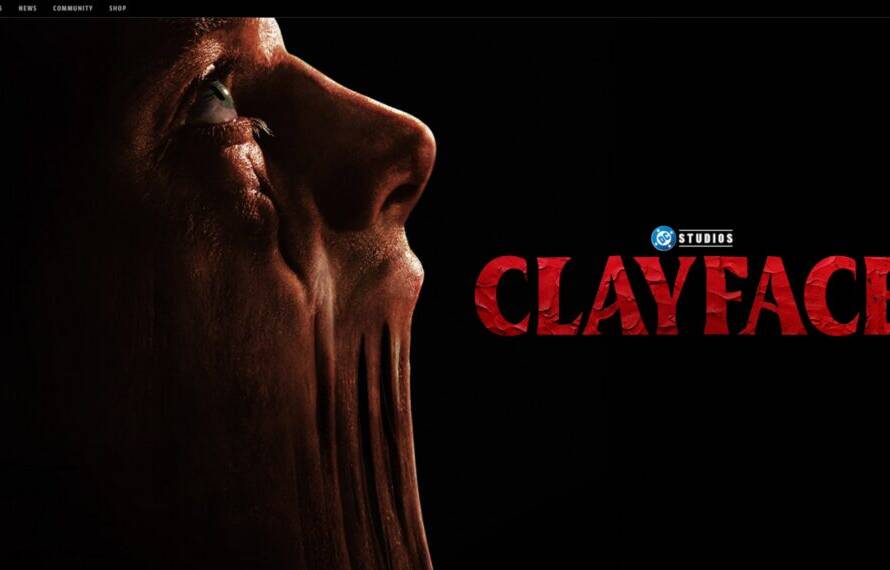
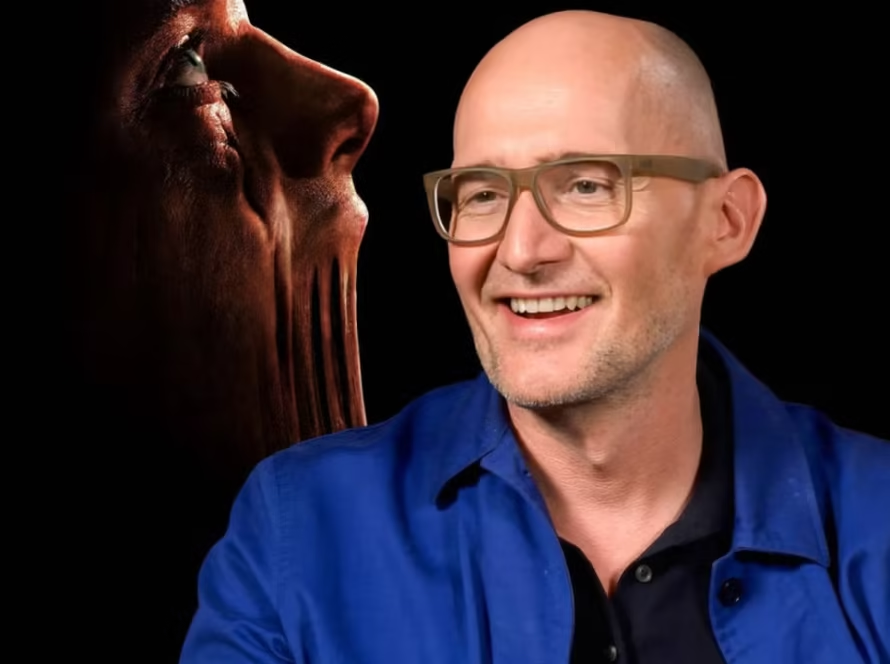
DC Studios is stepping away from familiar superhero formulas with a film that trades city-saving action for body horror, psychological deterioration, and a Hollywood star losing control of his own identity.
Superhero movies have spent years building worlds filled with extraordinary abilities, spectacular battles, and characters destined to save or destroy humanity. Horror operates differently. It takes something familiar, makes it unsettling, and forces audiences to confront what they would rather not see.
With Clayface, DC Studios is bringing those two traditions together through a character whose greatest power might also be his most horrifying curse.
Directed by James Watkins, the upcoming film follows Matt Hagen, a rising Hollywood actor whose life changes after a violent encounter leaves him disfigured. An experimental treatment offers the possibility of restoring his appearance, but the procedure sends him down a path of increasingly disturbing physical transformations and revenge.
The result is a DC movie designed to function as horror first, with comic-book mythology providing its foundation.
A Horror Movie Hiding Inside Gotham
Clayface might not have the household recognition of the Joker, but the character offers filmmakers something unusually suited to horror: a body that refuses to obey the rules of human anatomy.
His shape-shifting abilities can turn ordinary physical features into sources of terror. A face can become unrecognisable. A familiar person might not be who they claim to be. Even the boundaries between one body and another can begin to disappear.
For Watkins, whose previous work includes Speak No Evil and The Woman in Black, that premise provides opportunities to create discomfort through physical transformation rather than relying exclusively on digital spectacle.
The film uses visual effects, but the production also places emphasis on practical effects and tangible changes to the character’s appearance. The objective is to make Hagen’s transformation feel immediate and disturbing, rather than presenting it as another superhero power demonstration.
That distinction could define the film’s identity. Clayface is not simply learning to control an extraordinary ability. He is becoming something he may no longer recognise.
Mike Flanagan Had a Different Vision for DC
The project reportedly began with a pitch from horror filmmaker Mike Flanagan, who approached DC Studios with the idea of building a feature around the relatively obscure Batman villain.
Studio co-chiefs James Gunn and Peter Safran were not initially seeking a standalone Clayface movie. Flanagan’s concept, however, fitted their broader ambition to develop films across different genres rather than confining the DC Universe to a single blockbuster formula.
Flanagan subsequently worked on the screenplay with Hossein Amini, while Watkins came aboard to direct.
The creative combination is significant. Flanagan has established a reputation for horror stories that place emotional conflict alongside frightening imagery, while Watkins has experience creating tension through atmosphere and human behaviour.
Their involvement suggests that the film’s central question is not simply how dangerous Clayface can become. It is what happens to a person when the pursuit of a normal life begins consuming everything that makes that life meaningful.
Matt Hagen: An Actor Who Loses More Than His Face
Tom Rhys Harries plays Matt Hagen, a Hollywood actor whose career is derailed by a violent incident involving a mob boss. As his appearance deteriorates, so does his place in an industry where physical image can determine professional survival.
After conventional treatments fail, Hagen turns to an experimental procedure developed by scientist Caitlyn Corr, played by Naomi Ackie. The treatment uses a clay-like living organism in an attempt to restore his face.
The apparent solution introduces a much greater problem.
Hagen’s transformation becomes physical, psychological, and increasingly destructive. His efforts to reclaim his former life begin to distort his sense of identity, while his relationship with Caitlyn becomes central to the decisions he makes.
This is where Clayface moves beyond the familiar story of a person acquiring powers and deciding how to use them. Hagen’s tragedy is rooted in the gap between who he believes himself to be and what he is becoming.
His acting background adds another dimension. An actor makes a living by inhabiting other identities, but Hagen’s transformation threatens to make that process permanent. The ability to change his appearance becomes inseparable from the question of whether he can retain an identity of his own.
Why Body Horror Makes Sense for Clayface
Body horror is built around the fear that the human body can become unfamiliar, uncontrollable, or fundamentally altered. It often turns biological processes into something grotesque, using physical transformation to explore deeper anxieties about identity, vulnerability, and autonomy.
Clayface fits naturally into this tradition.
His body is both his instrument and his prison. The same malleability that allows him to imitate other people also makes his own physical identity unstable.
The film’s transformation sequences take this concept further, with Hagen changing his appearance and assuming the forms of other characters. Watkins has described a production process in which actors sometimes performed scenes opposite Harries and then repeated them, allowing the performances to be mirrored and reshaped.
That approach makes the character’s ability to impersonate others a filmmaking challenge as well as a visual effect.
It also reinforces a central idea: Clayface is not just a monster wearing different faces. His entire existence is built around the instability of appearances.
Can Superhero Cinema Escape Its Own Formula?
DC Studios is attempting to establish a wider creative identity under Gunn and Safran, with projects that can differ substantially in tone, scale, and genre.
Clayface represents a particularly clear test of that approach. Rather than building the film around a famous hero, a large ensemble of costumed characters, or a climactic battle, the studio is placing a lesser-known villain at the centre of a character-driven horror story.
The reported production budget of approximately $40 million is also relatively modest compared with many large-scale superhero productions. Its R rating further distinguishes it from the more family-oriented end of the comic-book movie market.
There is precedent for combining horror with superhero mythology. Wes Craven’s Swamp Thing, Sam Raimi’s Darkman, and Brightburn, produced by Gunn, each approach the relationship between extraordinary abilities and horror from different directions.
But genre experimentation comes with risk. An established superhero formula gives audiences a familiar set of expectations. A film like Clayface must persuade viewers that a character they may barely know can sustain an entire feature without relying on those conventions.
Watkins has argued that audiences do not need extensive prior knowledge of Clayface to understand the movie. The film is intended to stand on its own, using its DC connections as context rather than a prerequisite.
That is a meaningful distinction in an entertainment landscape where interconnected universes can sometimes make individual films feel like chapters in a much larger product.
What Happens If Clayface Works?
A successful Clayface could demonstrate that DC’s mythology supports more than superhero adventures. Gotham’s criminals, experiments, and morally complicated characters provide material for thrillers, psychological dramas, and horror films without requiring every story to follow Batman.
It could also strengthen the case for giving filmmakers greater freedom to approach comic-book characters through their own creative disciplines.
However, the film faces a more immediate challenge: establishing an emotional connection with audiences while delivering the disturbing imagery its premise promises. Body horror alone cannot sustain a compelling story. Hagen’s relationships, ambitions, and deterioration must give the transformation meaning.
The filmmakers’ emphasis on his relationship with Caitlyn suggests that the human drama is intended to provide that foundation.
The central conflict is ultimately more intimate than a battle between a hero and a villain. It concerns an actor desperate to reclaim the life he has lost, a scientific intervention that changes him in ways he cannot fully control, and the increasingly destructive decisions he makes in pursuit of his former self.
Release Date and Cast
Clayface stars Tom Rhys Harries as Matt Hagen, alongside Naomi Ackie, David Dencik, Max Minghella, Eddie Marsan, Nancy Carroll, and Joshua James.
James Watkins directs from a screenplay by Mike Flanagan and Hossein Amini. The film is produced by DC Studios, with Matt Reeves, Lynn Harris, James Gunn, and Peter Safran among the producers.
The film is scheduled to begin its international theatrical rollout on 21 October 2026, with its North American release set for 23 October 2026.
For DC, Clayface represents an opportunity to explore a darker corner of its fictional universe. For audiences, it offers a different kind of comic-book adaptation: one in which the most frightening transformation may not be the change in a person’s body, but the gradual loss of the person they once were.
SEO title: Clayface Movie: Can DC Blend Superhero Cinema With Horror?
Meta description: DC Studios’ Clayface blends Batman mythology with body horror. Explore Mike Flanagan’s vision, James Watkins’ direction, Tom Rhys Harries’ role, and the film’s October 2026 release.
Suggested URL slug: clayface-dc-horror-superhero-movie
Focus keyphrase: Clayface movie
Tags: Clayface, DC Studios, Batman, DC Universe, Body Horror, James Watkins, Mike Flanagan, Tom Rhys Harries, Horror Movies, Superhero Movies